


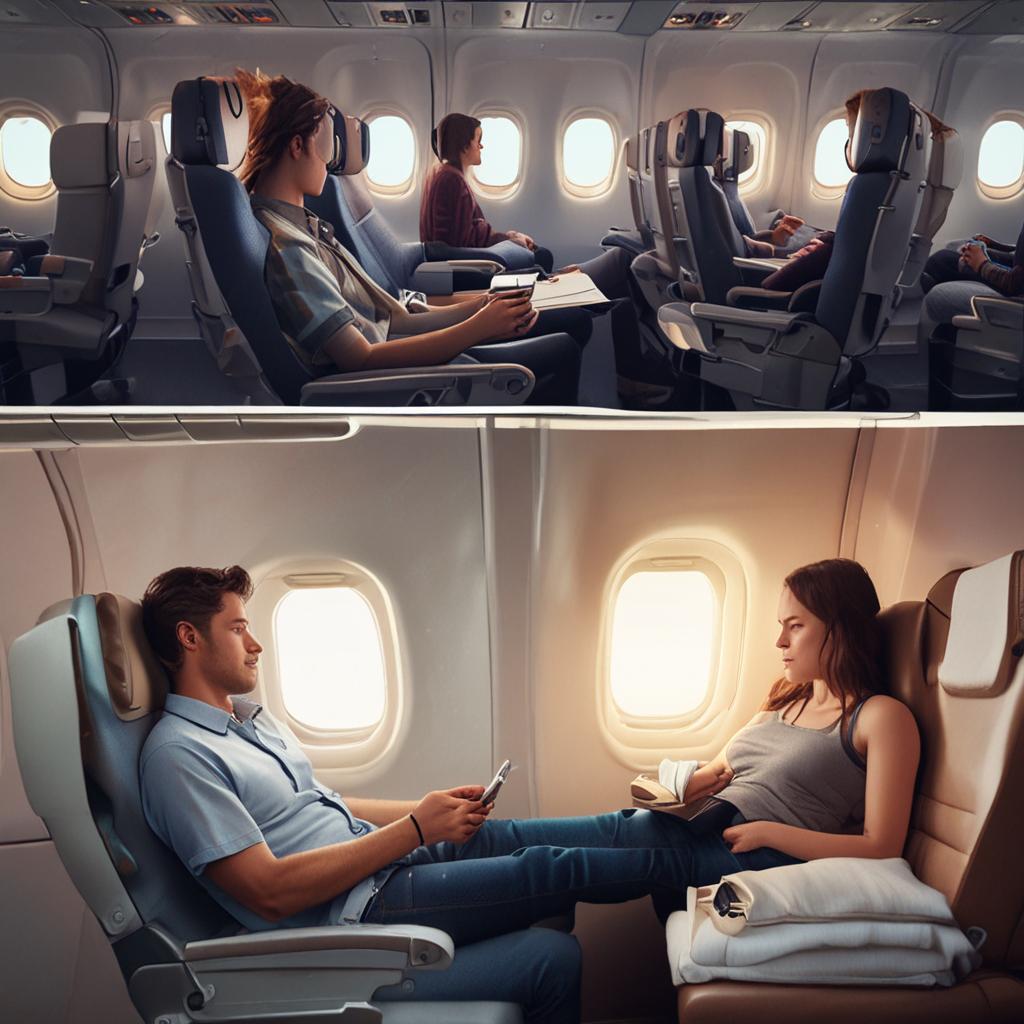
Most articles answering this question exist to sell you a seat, so they only ever say yes. This one is different. Business class is absolutely worth it on some trips — and a waste of money on others. Here's the honest framework, with real numbers, to decide for your specific flight.
How big is the gap you are paying for? The UK Business Class Fare Index shows the average premium of business class over premium economy, route by route.
The honest answer: Business class is most worth it on long-haul overnight flights of 8+ hours, where a flat bed changes how you arrive, and on trips where arriving rested has real value — a wedding, a bucket-list holiday, a meeting that matters. It's least worth it on short daytime hops where a wider seat is a mild upgrade at a steep premium. And crucially, the answer flips depending on the price you pay: a private fare can turn a clear "no" into an easy "yes".
The reason the "always worth it" articles ring hollow is that they ignore the one thing that actually decides it: the marginal value of comfort on your specific journey, at your specific price. A flat bed on a 14-hour overnight to Australia is transformative. The same cabin on a 90-minute daytime hop to Europe is barely different from a good economy seat — for several times the cost. Same product, wildly different value. Let's work through exactly when the maths lands in your favour.
The Single Biggest Factor: Flight Length and Timing
If you take one thing from this guide, make it this. The value of business class scales almost entirely with how long — and when — you're in the air. A useful rule of thumb: below about four hours you're mostly buying lounge access and priority; above eight hours overnight, you're buying sleep, and sleep is worth a great deal.
| Flight type | Example | Verdict |
|---|---|---|
| Long-haul overnight (10+ hrs) | London–Sydney, London–Singapore | Worth it |
| Long-haul daytime (8–12 hrs) | London–Los Angeles | Usually worth it |
| Medium-haul (4–7 hrs) | London–Dubai, London–New York | Depends on price & purpose |
| Short-haul (under 3 hrs) | London–Europe | Rarely worth full price |
The pattern is clear: the longer the flight, the more you're actually buying. On a long overnight to Sydney or Singapore, the difference between arriving after real sleep and arriving after none is the difference between starting your trip on day one or day two. That's what you're paying for — not the champagne.
What You're Actually Paying For — and What Each Is Worth
Let's be specific about the benefits, and honest about how much each genuinely adds:
- The flat bed (high value on long-haul, near-zero on short). The headline benefit and the only one that delivers real, restorative sleep. On an overnight flight it's transformative; on a short daytime hop it's almost irrelevant.
- Lounge access (moderate, consistent value). A calm space to work, eat and shower before you fly — genuinely useful on any long trip or tight connection, and worth more if you'd otherwise be killing hours at the gate.
- Fast-track and priority (moderate value). Priority security, boarding and baggage. Saves stress and 20–40 minutes of queuing — worth most when you're time-poor or travelling with family.
- Space and privacy (scales with time aboard). Direct aisle access, room to work, a privacy door on newer suites. The longer you're in the seat, the more this matters.
- Dining and service (a pleasant extra). Better food, proper glassware, attentive crew. Genuinely nice, but rarely worth the premium on its own.
Two Worked Examples: When the Maths Says Yes vs No
Example 1 — London to Sydney (verdict: worth it)
A ~22-hour overnight journey to Sydney. In economy you'd land after a day of broken half-sleep in a cramped seat, likely writing off your first 24–48 hours to exhaustion and jet lag. In business, via a private fare from around £3,998 return, you sleep flat across the long sectors, use the lounge to shower and reset at your hub, and step off ready to function. On a trip you've spent thousands to enjoy, protecting the first two days — and the tail of the trip on the way home — makes the premium easy to justify. Here the seat is part of the holiday, not a separate line item.
Example 2 — London to a European city, daytime (verdict: usually not)
A 2-hour daytime hop. Business class here buys you lounge access, a blocked middle seat and a slightly better sandwich — for potentially three or four times the economy fare. You won't sleep, you barely settle before descent, and the "flat bed" advantage doesn't exist because there's no flat bed on short-haul European business. Unless you specifically need the lounge for a connection or want fast-track with heavy bags, the money is better spent on the trip. This is the classic case where "is business class worth it?" is honestly answered no.
The two examples make the underlying rule obvious: the same question has opposite answers depending on the flight. Anyone who tells you business class is "always" worth it is selling, not advising.
Is It Worth It for Your Type of Trip?
The business traveller
If you're flying to work — a meeting, a conference, a negotiation — business class usually pays for itself. Arriving sharp instead of jet-lagged directly affects how you perform, and the lounge and onboard space let you actually get work done en route rather than losing the day. For a trip where the outcome has real financial value, the fare is a rounding error against showing up at your best. This is why corporate travel policies routinely fund it on long-haul.
The leisure traveller on a big trip
For a once-in-a-lifetime holiday, a milestone anniversary, or the long haul to Cape Town, the Maldives or Australia, business class protects the very thing you're spending big to enjoy. There's little sense in paying for a dream fortnight and then losing the first three days to arrival exhaustion. On these trips the flight is the opening chapter of the holiday, and arriving refreshed is worth real money.
The family visiting relatives overseas
Long-haul trips to reunite with family — common on UK routes to Australia, New Zealand and South Africa — are exactly where more leisure travellers now upgrade. For older relatives, anyone with mobility or health needs, or parents travelling with children, the flat bed, extra space and priority handling turn a gruelling journey into a manageable one. The reduced stress on both the traveller and everyone around them is a genuine, if unglamorous, part of the value.
When it's honestly not worth it
On a short daytime European hop, business often buys little more than lounge access and a blocked middle seat. If you're fit, travelling light, and the flight is under three hours in daylight, the premium rarely justifies itself. The same applies when the only available business fare is a last-minute, top-bucket price — at that point you're overpaying massively for the same seat that was far cheaper weeks earlier. In both cases, the smart move is to keep the money for the trip.
The Factor That Changes Everything: What You Actually Pay
Here's the twist most "is it worth it" articles miss entirely. The answer depends enormously on the price you pay — and most people are comparing a cheap economy fare against a full-fare business price, which is the worst possible version of the deal.
Through private consolidator fares, business class often costs far less than the airline's published price — sometimes bringing it within reach of a flexible premium economy fare. Our current UK examples show the point: Emirates London to Dubai from £2,543, Singapore Airlines London to Tokyo from £2,698, Qatar London to Sydney from £3,998. When the gap to economy narrows like that, the "worth it" calculation shifts dramatically. A flat bed to Dubai at £2,543 is a completely different proposition from the eye-watering number on the airline website.
The real question isn't "is business class worth it?"
It's "is business class worth it at this price, on this flight, for this trip?" Lower the price with a private fare and a "maybe" becomes a clear "yes" far more often than people expect. Always get a specialist quote before you decide — you may be comparing against the wrong number.
Business Class vs Premium Economy: The Middle Ground
If business class feels like a stretch, premium economy is the honest middle option — a wider recliner, more legroom, better service and often lounge access on some carriers, usually at around half the business fare. It won't give you a flat bed, but for travellers who can sleep upright or want to protect the holiday budget, it's a sensible compromise on medium and even some long-haul routes.
The decision comes down to one question: can you sleep sitting up? If you genuinely rest in a recliner, premium economy is excellent value and business is an indulgence. If you don't — and most people don't sleep well upright for 12 hours — the flat bed is precisely what you're paying for, and only business (or first class) delivers it. Be honest with yourself about your own sleep, because that single answer settles the whole question.
Not sure if it's worth it for your trip?
Tell us your route and dates and we'll quote business, first and premium economy side by side — using private fares — so you can see the real cost gap and decide for yourself. No pressure.
Compare fares →A Quick Decision Checklist
Run your trip through these five questions. The more you answer "yes", the more clearly business class is worth it:
- Is the flight over eight hours, and ideally overnight?
- Do you struggle to sleep sitting upright?
- Does arriving rested genuinely matter — a meeting, an event, a short trip where day one counts?
- Have you got a private-fare price, not just the airline's published one?
- Is the trip significant enough — a celebration, a reunion, a bucket-list journey — to value the experience itself?
Five yeses and it's a clear buy. One or two, on a short daytime hop at full fare, and your money is better kept for the holiday.
See what business class really costs
Travel Business First holds private business, first and premium economy fares worldwide. Get all three priced for your trip and decide what's worth it for you. Dubai from £2,543, Tokyo from £2,698. ATOL 10713 · IATA accredited.
Request your quoteRelated Reading
- How to Fly Business Class Cheap
- Business vs First Class
- Business Class Flights
- How to Book Affordable Business Class
- What to Wear on a Long-Haul Business Class Flight
External references: ATOL protection (CAA) · Skytrax ratings · IATA
Is Business Class Worth It? Honest 2026 Verdict — FAQs
Prefer to talk? 0203 727 6360.
Is business class worth it for a long-haul flight?
On overnight long-haul flights of 8+ hours, yes. The flat bed lets you arrive rested rather than exhausted, which is the core value. The longer and later the flight, the more worthwhile it becomes.
When is business class NOT worth it?
On short daytime flights under three hours, where you mainly gain lounge access and a slightly bigger seat for a steep premium, or when the only fare available is a last-minute top-bucket price.
Is business class worth it over premium economy?
It comes down to sleep. If you rest well in a recliner, premium economy is great value. If you do not, only business class's flat bed delivers real rest on a long flight, and that is what justifies the difference.
How much more does business class cost than economy?
Typically two to five times an economy fare at published prices, but private consolidator fares narrow that gap significantly, which changes the value calculation in business class's favour.
Is business class worth it for visiting family overseas?
On long-haul family trips, especially with older relatives, children or mobility needs, the comfort, space and priority handling make it a genuinely practical investment, not just a luxury.
Does the price make business class worth it?
Enormously. The same seat can be full-fare expensive or a private-fare bargain. Always compare a specialist quote before deciding, as a lower price turns many maybe trips into a clear yes.